Field sales has always been challenging. Managing people who operate outside the office, across multiple locations, with varying market conditions was never simple. But what has changed is the expectation.

Today, and especially in 2026, businesses expect:
- Clear visibility into field execution: Managers should know what is happening on the field in real time, not through delayed calls or reports.
- Faster decision-making: Sales leaders need up-to-date data to act immediately, not insights that arrive after the opportunity is lost.
- Predictable outcomes: Organizations expect consistent performance driven by process, not results that depend only on individual effort.
Yet many field sales teams still operate with manual processes that were designed for a very different time.
This gap between expectation and execution is exactly why field sales teams need automation today not tomorrow.
The Reality of Manual Field Sales Today
Manual field sales typically relies on:
- Phone calls for updates: Managers depend on verbal updates that are subjective, incomplete, and hard to verify.
- Messages for attendance: Attendance is often shared through chats, making it inconsistent and difficult to track historically.
- Spreadsheets for reports: Sales data is entered manually, increasing errors and reducing reliability.
- End-of-day or end-of-week summaries: Critical insights arrive too late to influence daily execution.
While this approach feels familiar, it creates multiple blind spots.
Managers often don't know:
- Who is actually active on the field right now: Presence is assumed rather than confirmed with real data.
- Which markets are being covered properly: Coverage gaps remain hidden until performance drops.
- Where execution is breaking down: Issues surface only after targets are missed.
By the time issues are identified, the opportunity to fix them has already passed.
Automation Brings Visibility Where Manual Processes Fail
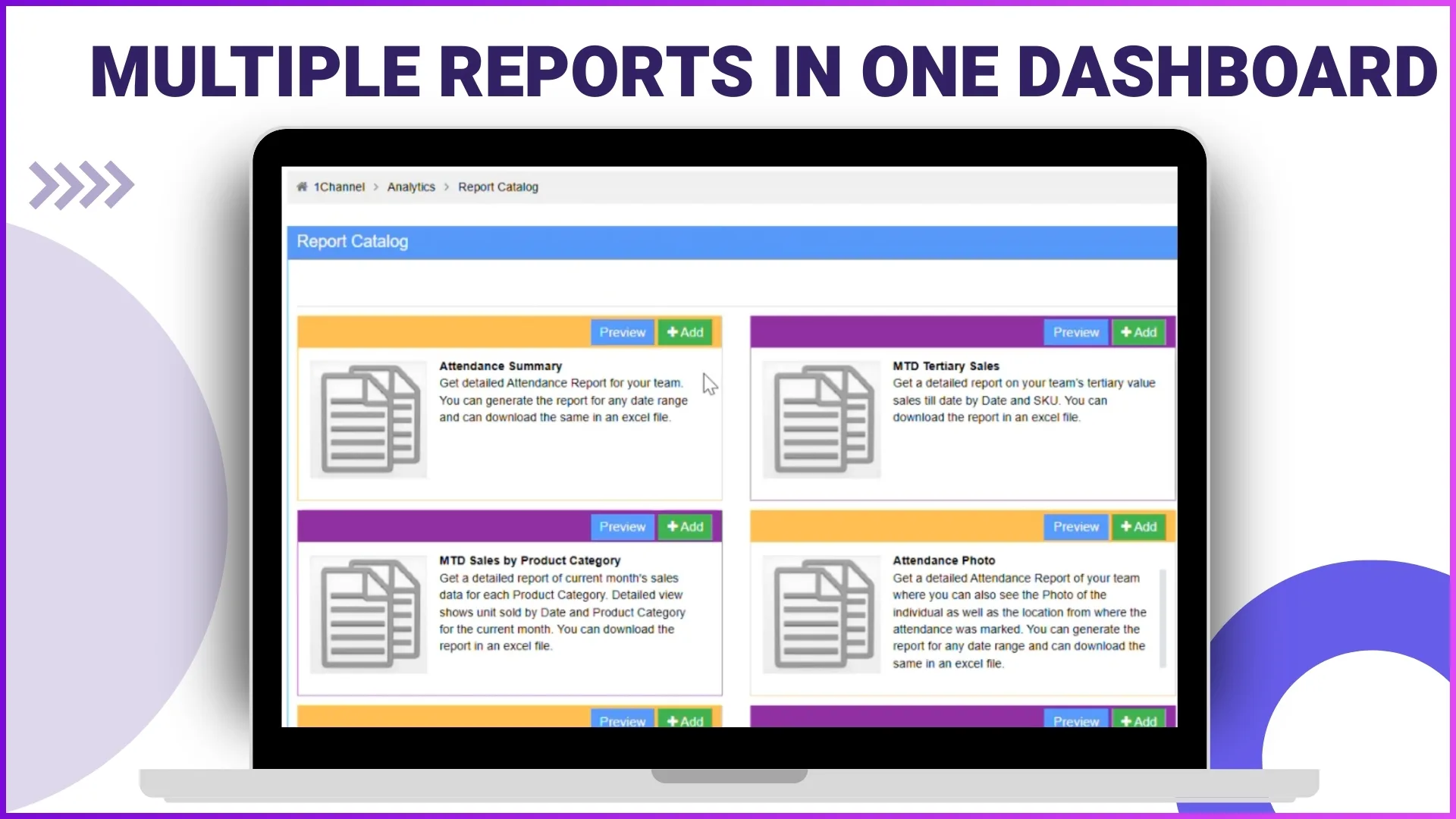
One of the biggest reasons field sales teams need automation is real-time visibility.
Automation removes dependency on delayed updates. Field activity is captured as it happens, allowing managers to:
- See daily execution clearly: Every field action is visible without chasing updates.
- Identify missed visits early: Gaps are spotted while corrective action is still possible.
- Intervene before performance drops: Managers can act proactively instead of reacting late.
In today's competitive environment, visibility is not a "nice to have." It's essential for control and consistency.
Accountability Cannot Be Assumed Anymore
In manual setups, accountability is often built on trust and follow-ups. While trust is important, it doesn't scale.
Automation introduces system-driven accountability:
- Attendance is recorded accurately: Presence and availability are captured objectively.
- Field activity is traceable: Every action can be reviewed and validated.
- Execution data is verifiable: Performance discussions are based on facts, not assumptions.
This doesn't mean micromanagement. It means clarity for both managers and sales reps.
Accountability needs to be transparent, not subjective.
Faster Decisions Require Faster Data
Business decisions are only as good as the data behind them.
Manual reporting slows everything down:
- Data reaches managers late: Insights lose relevance by the time they are reviewed.
- Errors go unnoticed: Manual entry increases the risk of incorrect decisions.
- Trends are identified after damage is done: Opportunities and risks are spotted too late.
Automation ensures data flows continuously from the field to decision-makers. This allows leadership teams to:
- Spot performance gaps early: Problems are identified before they escalate.
- Adjust plans quickly: Strategy can be refined in near real time.
- Respond to market changes faster: Teams stay aligned with dynamic market conditions.
In fast-moving markets, delayed decisions are costly.
Field Sales Is No Longer Just About Selling
Modern field sales teams do more than just take orders. They:
- Collect market feedback: Insights from the field influence pricing, products, and strategy.
- Monitor competition: Competitive activity needs to be tracked consistently across markets.
- Ensure brand visibility: Execution on the ground directly impacts brand perception.
- Coordinate with multiple internal teams: Sales, operations, finance, and leadership all depend on field data.
Managing all this manually increases complexity and reduces effectiveness.
Automation organizes these activities into structured workflows, ensuring nothing critical is missed.
Scaling Without Automation Is Risky
As field teams grow, manual systems begin to break:
- More people means more data: Manual tracking becomes unmanageable at scale.
- More locations mean more complexity: Visibility drops as geography expands.
- More products mean more coordination: Execution becomes inconsistent without structure.
Automation provides a framework that supports growth without chaos.
Whether a team has 50 reps or 500, processes remain consistent and manageable.
Managers Need to Lead, Not Chase Updates
One often-overlooked reason for automation is manager productivity.
In manual environments, managers spend too much time:
- Chasing reports: Valuable time is wasted collecting basic information.
- Following up on attendance: Presence verification becomes a daily struggle.
- Verifying information: Trust issues arise due to inconsistent data.
Automation frees managers from these tasks, allowing them to focus on:
- Coaching teams: Managers spend more time improving performance.
- Improving strategy: Decisions are based on patterns, not guesswork.
- Driving better results: Leadership shifts from supervision to impact.
This shift is critical for long-term performance improvement.
Automation Improves Trust Across Teams
Manual systems often lead to disputes:
- Between sales and finance over expenses: Lack of clarity creates friction and delays.
- Between managers and reps over performance: Data ambiguity leads to disagreements.
- Between leadership and operations over data accuracy: Different versions of truth slow decisions.
Automation creates a single source of truth, reducing friction and building trust across departments.
When everyone works with the same data, alignment improves naturally.
Why "Today" Matters More Than Ever?
Automation is no longer about being ahead of the curve. It's about keeping up.
Markets are more competitive. Customer expectations are higher. Leadership demands clarity.
Field sales teams that continue to rely on manual processes risk:
- Lower productivity: Time is lost on non-selling activities.
- Poor visibility: Managers operate with incomplete information.
- Slower growth: Expansion becomes harder to control and sustain.
Automation addresses these challenges directly.
Explore Sales Force Automation
Empower your field teams with 1Channel's AI-powered SFA platform. Drive efficiency, boost sales, and gain real-time visibility across your entire sales operations.
Explore SFA Solutions →Frequently Asked Questions (FAQs)
1. Why do field sales teams need automation today?
Field sales teams need automation to gain real-time visibility, improve accountability, and make faster decisions in an environment where manual tracking can no longer scale or deliver accuracy.
2. Can small or mid-sized field sales teams benefit from automation?
Yes. Automation is not only for large enterprises. Even small and growing teams benefit from better visibility, structured execution, and reduced dependency on manual follow-ups.
3. Does field sales automation reduce flexibility for sales representatives?
No. Automation provides structure without restricting flexibility. It ensures critical activities are tracked while allowing reps to adapt to on-ground realities.
4. What problems do manual field sales processes create?
Manual processes lead to delayed reporting, poor visibility, inconsistent execution, and excessive managerial effort spent on chasing updates instead of improving performance.
5. Is field sales automation about replacing people with technology?
No. Automation supports field sales teams by removing administrative burden and improving clarity, enabling people to focus more on selling and relationship-building.
Final Thought
Field sales automation is not about replacing people or adding complexity. It's about creating a system that supports how field sales actually operates today.
For teams looking to improve execution, scale confidently, and make better decisions, automation is no longer optional it's a necessity.