Late attendance is a common operational challenge for sales and field teams working across multiple locations. Since these teams do not operate from a fixed office, tracking punctuality becomes dependent on accurate attendance capture, visibility, and reporting mechanisms rather than manual supervision.
Late attendance tracking helps organizations understand when employees start their day, how often they report late, and how consistently attendance policies are followed. When handled through a centralized system, it becomes an important input for compliance monitoring, payroll processing, and workforce planning.
What Is Late Attendance in Field Sales Operations?
Late attendance refers to instances where a field employee marks attendance after the defined reporting time or misses timely attendance marking altogether. In field operations, this can happen due to:
- Delay in reporting from the field location
- Missed attendance marking during the start of the day
- Attendance marked after initial work activities have begun
The document defines late attendance as a trackable attendance parameter, captured and reported within the attendance analytics and dashboards.
Why Late Attendance Tracking Is Important for Sales Teams
For field-based sales teams, attendance is directly linked to:
- Daily market visits
- Activity execution
- Payroll accuracy
- Compliance with assigned plans
Without structured tracking, late attendance can remain unnoticed, leading to gaps in reporting and inaccurate workforce data. The system addresses this by recording attendance time, status, and deviations from expected reporting behavior.
How Late Attendance Is Captured in the Attendance System
Attendance Marking Through Mobile Application
Sales team members mark attendance through the mobile application, where attendance status options are made available based on configured rules. Each attendance entry is logged with:
- Time of attendance marking
- Location from where attendance is marked
- Attendance status selected by the user
This ensures that late attendance can be identified based on actual reporting time.
AI-Based Attendance Validation
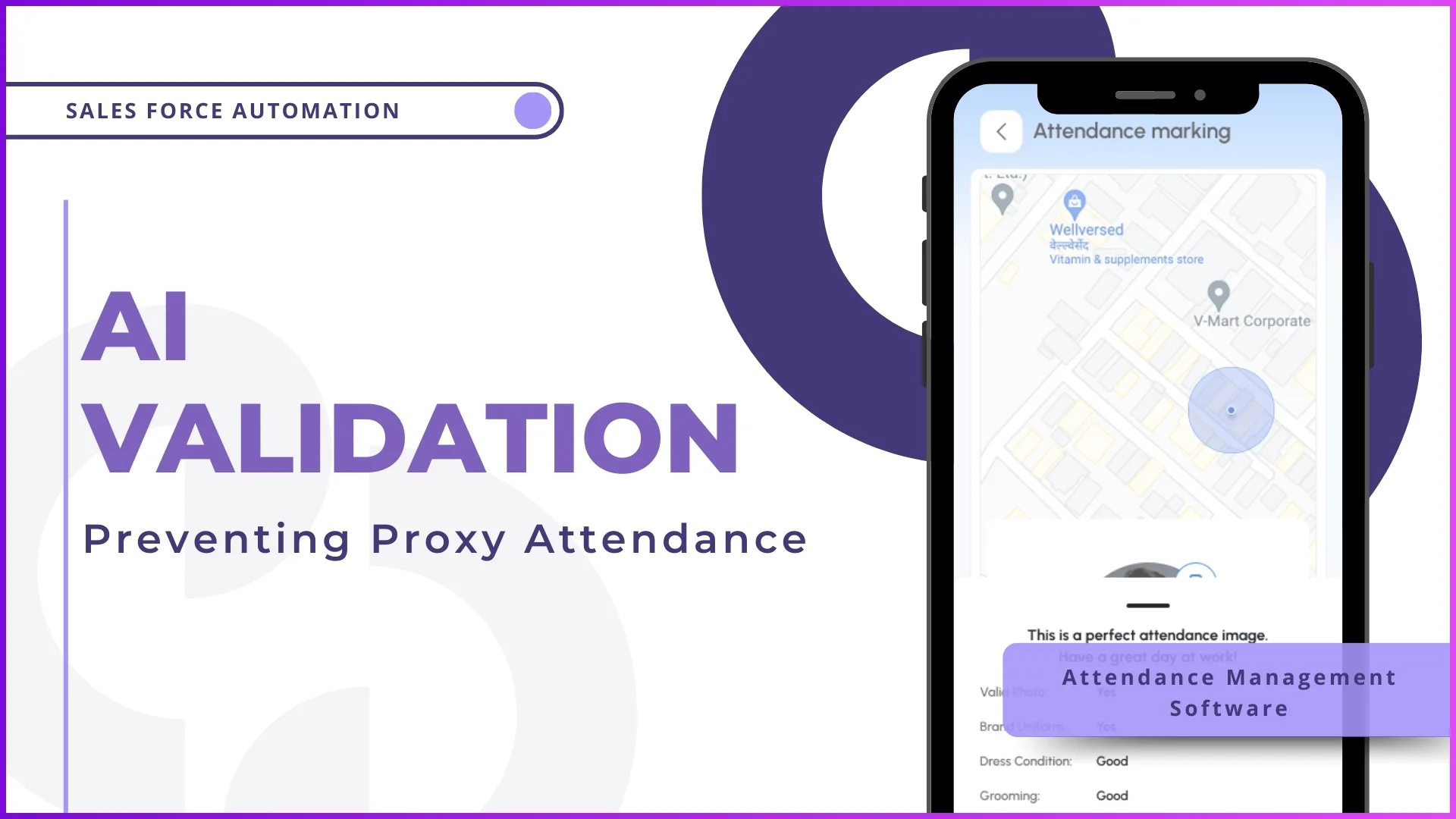
The system includes AI-based face validation during attendance marking. Employees must match their attendance photo with the reference image uploaded at first login.
This ensures:
- Attendance is marked by the actual employee
- Late attendance entries are authentic
- Proxy or incorrect attendance marking is minimized
Late Attendance Visibility Through Dashboards
Attendance Dashboard Metrics
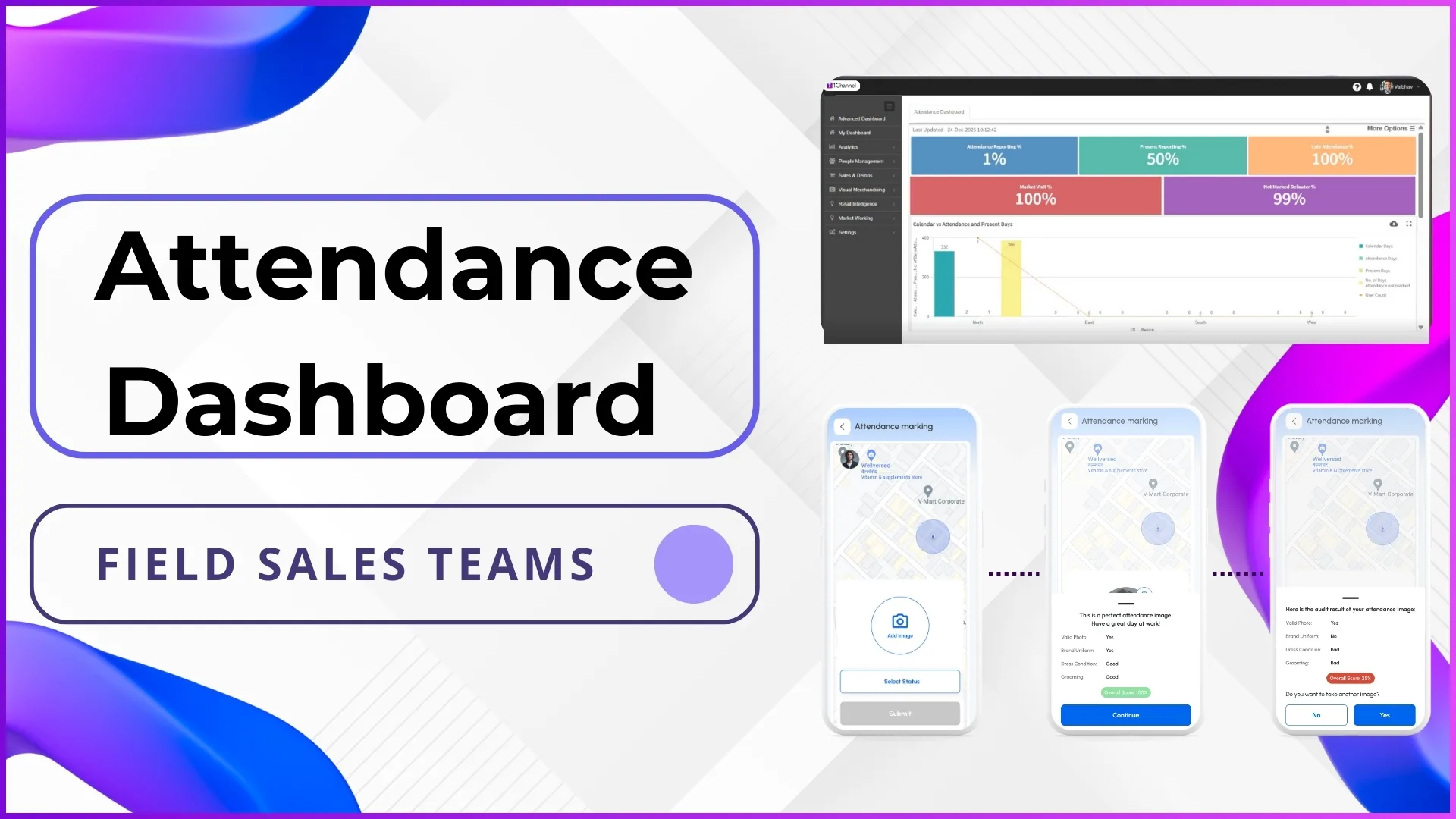
Late attendance is clearly visible through the Advanced Dashboard, which includes:
- Late attendance percentage
- Attendance reporting percentage
- Present reporting percentage
- Missed and defaulted attendance days
- Calendar-wise attendance view
Managers can quickly identify patterns of late reporting across teams or individuals from a single dashboard view.
Employee-Level Attendance Compliance Details
The system provides detailed employee-wise attendance compliance data, including:
- Number of late attendance instances
- Total present days
- Missed attendance days
- Defaulted days
Filters such as employee code, role, city, and date range allow precise analysis of late attendance trends.
Late Attendance in Reports and Analytics
Attendance Summary and Detailed Reports
Late attendance data can be accessed through multiple reports, including:
- Attendance Summary Report
- Detailed Attendance Report
- Employee Attendance Report with time and location
- Attendance Photo Report
These reports can be generated for any date range and downloaded in Excel format, enabling deeper analysis and record keeping.
Attendance & Last Transaction Report
This report combines attendance data with the employee's last transaction time of the day. It helps understand:
- When attendance was marked
- How much time was spent on field activities
- Whether late attendance affected daily execution
This gives managers contextual insight into punctuality versus productivity.
Managing Late Attendance Through Regularisation
Attendance Regularisation Flow
If an employee is present but fails to mark attendance on time, the system allows attendance regularisation. This includes:
- Selecting a past date from the attendance summary
- Applying a configured attendance status (such as On-Duty)
- Submitting remarks from predefined options
- Sending the request for approval
Once approved by the reporting manager, the attendance status is updated accordingly.
Manager Approval and Control
Managers and reporting heads can:
- Review regularisation requests
- Approve or reject attendance status changes
- Modify attendance remarks where permitted
This ensures late attendance corrections follow a controlled and auditable process.
Role of Attendance Closure in Late Attendance Tracking
The Attendance Closure feature consolidates final attendance data for payroll use. By the time attendance is closed:
- Late attendance instances are already recorded
- Approved regularisations are accounted for
- Payroll teams receive accurate attendance data
This prevents discrepancies between reported attendance and salary calculations.
Key Benefits of Structured Late Attendance Tracking
From an operational standpoint, late attendance tracking helps organizations:
- Maintain transparent attendance records
- Identify habitual late reporting
- Ensure data accuracy for payroll
- Improve compliance across distributed sales teams
- Reduce manual follow-ups and disputes
All tracking, reporting, and approvals are system-driven, minimizing dependency on informal communication.
Late Attendance Tracking with 1Channel SFA Software
1Channel SFA Software supports late attendance tracking as part of its broader attendance and people management framework. The system enables organizations to:
- Track late attendance percentages at team and individual levels
- Validate attendance using AI-based photo verification
- Monitor attendance through dashboards and detailed reports
- Manage regularisation and approvals in a structured manner
- Ensure payroll-ready attendance data through attendance closure
With configurable attendance statuses, analytics-driven dashboards, and role-based access, 1Channel provides a reliable framework for managing attendance discipline across large, distributed sales teams.
Track Late Attendance with 1Channel
AI-powered attendance tracking with real-time dashboards and payroll-ready reports
Explore Attendance Software →Frequently Asked Questions (FAQs)
How is late attendance identified?
Late attendance is identified based on the time of attendance marking and is reflected in attendance dashboards, reports, and compliance metrics.
Can employees correct late attendance?
Yes, through the regularisation process, employees can request corrections for past attendance, subject to manager approval.
Is late attendance visible to managers in real time?
Late attendance data is visible through dashboards and reports accessible to users with admin or managerial access.
Does late attendance affect payroll?
Late attendance data becomes part of attendance closure, which is used by payroll teams to process accurate salary calculations.