Managing large sales teams requires more than assigning targets and tracking performance. It also demands a clear structure that defines who reports to whom, how data flows, and who has visibility over which activities.
This is where an Organization Tree becomes essential for sales management.
An organization tree visually represents the hierarchical structure of sales users inside a system. It ensures smooth reporting, controlled access, and structured team management across regions, roles, and responsibilities.
What Is an Organization Tree in Sales Management?
An organization tree is a hierarchical arrangement of users within a sales system that reflects real-world reporting relationships.
Each user is placed at a specific level, and their position determines:
- Reporting authority
- Data visibility
- Approval rights
- Team oversight
The structure mirrors how sales teams actually function in the field.
Example
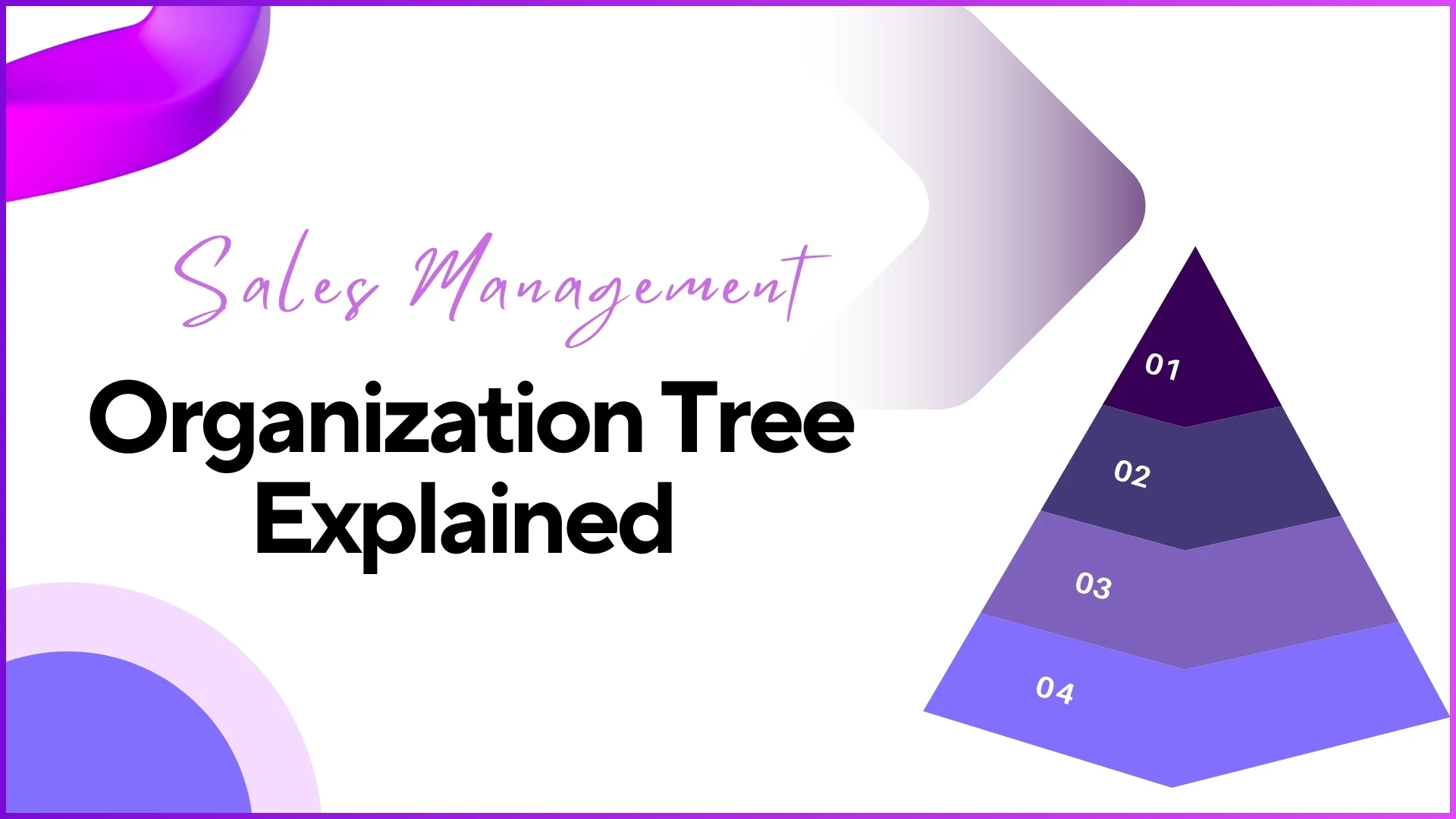
A National Sales Head sits at the top of the tree.
Below them are Regional Managers, followed by Area Managers, and then Field Sales Executives.
Each level reports upward, and each manager views data only for their assigned team.
Why Sales Teams Need an Organization Tree
Without a defined organization tree, sales management becomes fragmented and unclear. A structured hierarchy ensures operational clarity and accountability.
Key Reasons
- Clear reporting relationships
- Role-based access to data
- Organized team expansion
- Accurate performance tracking
Example
If a Regional Manager logs in, they can see the activities, attendance, and performance of Area Managers and Sales Executives reporting under them but not data from other regions.
How an Organization Tree Works in Sales Systems
The organization tree operates through parent-child relationships between users.
- Each user is assigned a reporting manager
- The system automatically inherits visibility rules
- Data flows upward in the hierarchy
Example
A Field Sales Executive submits daily activity reports.
These reports become visible to:
- The Area Manager
- The Regional Manager
- Higher-level management (as per hierarchy)
But the Field Sales Executive cannot view peer or higher-level data.
Ready to optimize your sales team structure?
Build clear reporting hierarchies and automate team management with 1Channel SFA.
Explore Workforce Management SoftwareRole-Based Hierarchy Within the Organization Tree
Different roles are placed at different hierarchy levels to maintain control and structure.
Common Role Levels
- Top Management
- Regional or Zonal Managers
- Area or Territory Managers
- Field Sales Executives
Each role comes with predefined access and responsibilities.
Example
An Area Manager can:
- View team attendance
- Review daily visit reports
- Monitor assigned territories
But they cannot edit system-wide settings reserved for higher roles.
User Assignment and Reporting Structure
Users are added to the system and then mapped to a reporting manager. This mapping builds the organization tree step by step.
Example
When a new Sales Executive joins:
- They are assigned to an Area Manager
- Automatically become part of that manager's team
- Their data starts flowing into the manager's reports
No manual data linking is required once the hierarchy is set.
Visibility Control Through the Organization Tree
The organization tree ensures controlled visibility, preventing data overload and misuse.
- Managers see only their team's data
- Executives see only their own activities
- Higher authorities get consolidated views
Example
A Regional Manager views a consolidated performance report for all areas under them, while individual Area Managers see only their respective territories.
Scalability of the Organization Tree
Sales teams grow and change frequently. A well-defined organization tree allows easy expansion without disrupting existing workflows.
Example
When a new region is added:
- A new Regional Manager is created
- Area Managers are assigned under them
- Field executives are mapped accordingly
The system instantly adapts without restructuring existing teams.
Impact on Sales Reporting and Performance Tracking
The organization tree directly influences how reports are generated and analyzed.
- Reports follow the hierarchy
- Performance metrics align with responsibility levels
- Reviews become more accurate
Example
A Sales Head can review region-wise performance because the organization tree groups users correctly under each region.
Common Challenges Without an Organization Tree
Without a defined hierarchy, sales teams face:
- Reporting confusion
- Data visibility issues
- Duplicate accountability
- Manual coordination
Example
If reporting lines are unclear, multiple managers may review the same executive, or worse, no one takes ownership of performance tracking.
Ready to streamline your field sales operations?
Create efficient user hierarchies and automate your field sales workflows with 1Channel SFA.
Explore Sales Force AutomationFAQs: Organization Tree for Sales Management
What is the main purpose of an organization tree?
To define reporting relationships and control data visibility within sales teams.
Can one manager handle multiple teams?
Yes. A manager can have multiple users reporting under them as defined in the hierarchy.
Does the organization tree affect reporting?
Yes. All reports follow the hierarchy structure to ensure accurate roll-ups.
Can the organization tree be modified later?
Yes. Users can be reassigned or hierarchy levels updated as teams evolve.
Is the organization tree important for large sales teams only?
It benefits both small and large teams but becomes critical as the organization scales.
Conclusion
An organization tree is not just a structural element, it is the backbone of effective sales management. By defining clear reporting lines, controlled visibility, and scalable user management, it brings order, transparency, and efficiency to sales operations.
When implemented correctly, it ensures that every sales activity, report, and performance metric aligns with the organization's real-world structure.